

Overview of the Italian Labor Market (2025/2026)
The Italian job market in 2026 is characterized by a distinct duality between highly industrialized zones and service-oriented regions, alongside a record demand for foreign labor in specific sectors. While the national unemployment rate has dropped to record lows of approximately 5.7%–6.0% (January 2026), structural challenges such as the youth unemployment rate (approx. 19%) and the economic gap between Northern and Southern Italy persist.
For foreign nationals, the market is currently driven by the Decreto Flussi (Flow Decree), a government three-year planning instrument that has significantly expanded entry quotas for non-EU workers for the 2026–2028 period.
The Economic Divide: North vs. South
Italy’s economy is geographically split, influencing where jobs are located and how much they pay:
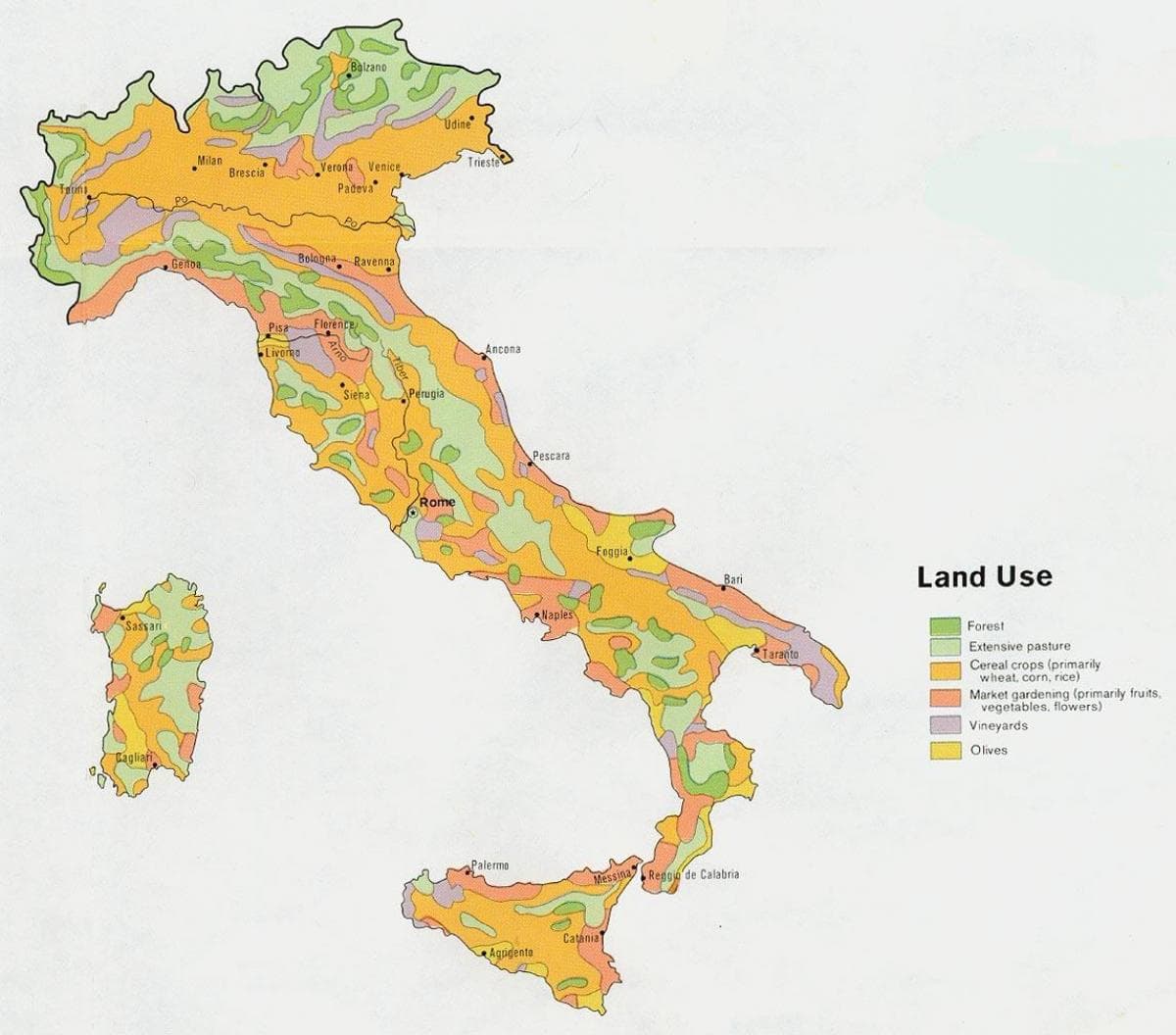
- Northern Italy (Milan, Turin, Bologna, Veneto): The industrial and financial engine of the country. This region hosts the majority of multinational corporations, heavy industry, automotive sectors, and finance hubs. Salaries are generally higher here to match the higher cost of living.
- Central Italy (Rome, Florence): Dominated by public administration, tourism, and fashion/textiles. The job market is stable but competitive, particularly in the capital.
- Southern Italy (Naples, Bari, Sicily, Sardinia): The economy relies heavily on agriculture, seasonal tourism, and small-to-medium enterprises (SMEs). Unemployment is structurally higher here, and wages can be lower compared to the North.
Employment Contract Types
Italian labor law is protective of employees. Understanding the contract type is crucial for visa stability and long-term residency.
1. Subordinate Employment (Lavoro Subordinato)
- Tempo Indeterminato (Permanent Contract): The "gold standard" of Italian employment. It has no expiration date and offers strong protection against dismissal. It is often required for long-term mortgages and financing.
- Tempo Determinato (Fixed-Term Contract): A contract with a specific end date. Under current rules, these generally cannot exceed 12–24 months without specific justification. Employers often use this as a trial period before converting to permanent status.
- Apprendistato (Apprenticeship): Targeted at young workers (typically roughly 18–29 years old). It combines work with training. Taxes for the employer are lower, making this a popular way to hire young graduates.
2. Self-Employment (Lavoro Autonomo)
Freelancers and contractors operate under a Partita IVA (VAT number). For 2025/2026, the Regime Forfettario (Flat-Tax Regime) remains the most popular option for solo freelancers:
- Income Limit: Up to 85,000 EUR ($98,600 USD, Jan 2026) annually.
- Tax Rate: A flat 15% tax on taxable income (reduced to 5% for the first 5 years for new businesses).
- VAT: Exempt from charging VAT (IVA) on invoices.
- Employee Rule: You can access this regime even if you have a separate employment income, provided that employment income was under 35,000 EUR ($40,600 USD) in the previous year.
Hiring Foreign Nationals: Decreto Flussi 2026
Non-EU nationals typically need a work permit sponsored by an employer before coming to Italy. This process is regulated by the Decreto Flussi, which sets strict annual quotas.
2026 Quota Overview:
- Total Spots Available: 164,850 work permits.
- Key Sectors: Freight transport, construction, tourism/hospitality, mechanics, telecommunications, food processing, and shipbuilding.
- Timeline (2026 Entry):
- Pre-filling of forms: October – December 2025.
- Click Day (Seasonal Agriculture): January 12, 2026.
- Click Day (Seasonal Tourism): February 9, 2026.
- Click Day (Non-Seasonal/Permanent): February 16, 2026.
Note: Applications are processed on a "first come, first served" basis (click day). High-skilled workers eligible for the EU Blue Card are exempt from these quotas and can apply year-round.
Salaries and Wages
Italy does not have a single statutory minimum wage set by the government. Instead, minimum wages are determined by National Collective Bargaining Agreements (CCNL) specific to each sector (e.g., Metalworkers CCNL, Commerce CCNL).
Average Salary Levels (Estimates 2026)
Salaries in Italy are generally lower than in Northern Europe or the USA, but the cost of living in many areas is also lower. Note: Exchange rate used is approx. 1 EUR = $1.16 USD (Jan 2026).
- Gross Average Salary: Approx. 30,000 EUR – 33,000 EUR ($34,800 – $38,280 USD) per year.
- Net Monthly Income: An average worker takes home roughly 1,650 EUR – 2,200 EUR ($1,914 – $2,552 USD) per month.
- Hourly Minimum (CCNL): Typically ranges from 7.00 EUR to 9.00 EUR ($8.12 – $10.44 USD) gross per hour depending on the contract level.
The "13th and 14th Month"
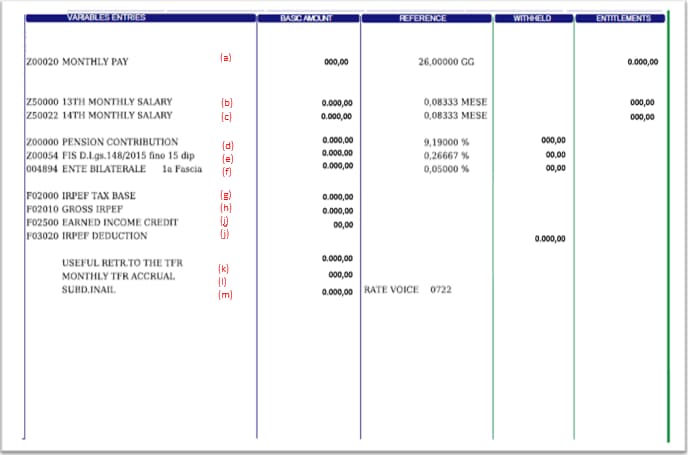
Salaries are rarely paid in just 12 installments.
13a mensilità (13th Month): A mandatory bonus paid in December (Christmas bonus).
14a mensilità (14th Month): Paid in June/July (Summer bonus), common in sectors like Commerce, Tourism, and Banking.
Example: If your annual salary is 28,000 EUR, it might be divided by 14, resulting in a lower monthly paycheck but two "double" pay periods.
Working Conditions & Labor Rights
- Working Hours: Standard full-time is 40 hours per week. Overtime must be paid at a premium.
- Annual Leave: By law, all employees are entitled to a minimum of 4 weeks (20–26 days) of paid vacation per year. Collective agreements often grant more.
- Sick Leave: Paid partially by the employer and partially by the state (INPS). Employees must provide a medical certificate (electronically transmitted by the doctor) from the first day of illness.
- Maternity Leave: Mandatory 5 months (usually 2 months before birth and 3 months after) paid at 80% of salary (often topped up to 100% by large employers).
Business Culture & Language
Language Barrier: While English is common in IT, finance, and tourism in major cities (Milan, Rome), Italian is essential for daily administration, interaction with HR, and social integration in 90% of workplaces. In SMEs (Small/Medium Enterprises), which make up the backbone of the economy, speaking Italian is virtually mandatory.
Hierarchy: Italian companies often maintain a vertical hierarchy. Decisions usually come from the top owner or director ("Il Direttore" or "L'Amministratore Delegato"). However, relationships are personal; building trust with colleagues over coffee breaks is considered part of the work, not time-wasting.