
Italian ID & Tax Numbers: Codice Fiscale & Carta d'Identità
Navigating daily life in Italy requires understanding two distinct identification systems: the Codice Fiscale (Tax Code) and the Carta d'Identità Elettronica (Electronic Identity Card). While the former is a prerequisite for almost any financial or legal interaction, the latter is an official identification document issued only to registered residents.
1. The Codice Fiscale (Tax ID)
The Codice Fiscale is an alphanumeric code issued by the Agenzia delle Entrate (Italian Revenue Agency). It is the single most important tool for interacting with Italian bureaucracy. It does not grant residency or a right to stay, but it acts as your unique identifier for fiscal and administrative purposes.
Who Needs It?
Every foreign national needs a Codice Fiscale immediately upon arrival (or even before) to:
- Open a bank account.
- Sign a rental contract (which must be registered).
- Register for the National Health Service (SSN).
- Buy a SIM card or set up home internet.
- Sign an employment contract.
The Format
The code consists of 16 characters derived from your personal data: Surname (3) + Name (3) + Year of Birth (2) + Month (1) + Day/Gender (2) + Place of Birth (4) + Control Character (1).
Note: While online tools can "calculate" this code, unofficial calculations are not valid for legal purposes. You must obtain the official certificate from the Agenzia delle Entrate.
How to Apply
From Abroad (Before Moving)
You can apply through the Italian Consulate in your country of residence. This is often the easiest method for students or property buyers.
- Form: Download and fill out the Model AA4/8.
- Submission: Email the form along with a copy of your passport to the consular office (check specific consulate instructions for email addresses).
- Cost: Free.
- Output: You will receive a PDF certificate via email. This paper certificate is legally valid.
In Italy
You must visit an office of the Agenzia delle Entrate.
- Appointment: Booking an appointment online via the Agenzia website is highly recommended to avoid long queues.
- Documents: Valid passport and visa (if applicable). EU citizens only need their ID/Passport.
- Output: You receive a paper certificate immediately.
The Plastic Card vs. Health Card
Historically, the government issued a green plastic card for the Codice Fiscale. However, for residents enrolled in the healthcare system, this has been replaced by the Tessera Sanitaria (Health Card). This blue card acts as both your health insurance card and your official Tax ID. If you are not enrolled in the health system (e.g., private insurance), you may rely on the paper certificate or receive a simple green Tax Code card.
2. The Carta d'Identità Elettronica (CIE)
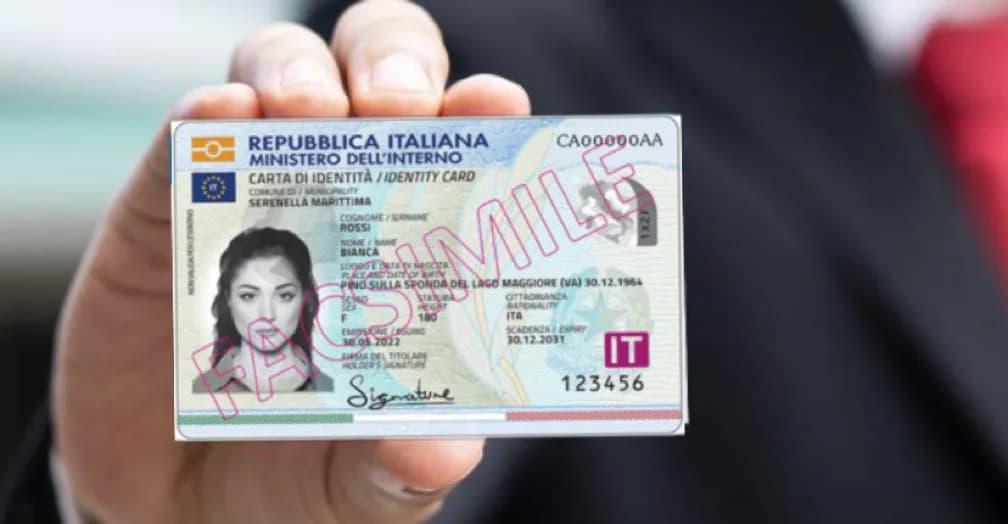
The Carta d'Identità Elettronica (CIE) is Italy’s official biometric ID card. Unlike the Codice Fiscale, you cannot get this immediately upon arrival; you must be an official resident.
Eligibility
To apply for a CIE, you must be registered in the Anagrafe (Registry of the Resident Population) of your municipality (Comune). This means you have already completed the "Iscrizione Anagrafica" process and a police officer has verified your address.
Application Process
The CIE is issued by the Ministry of the Interior but processed by your local municipality.
- Booking: Most municipalities require you to book an appointment via the Ministry’s Prenotazionicie portal or the local municipal website.
- Appointment: You must go in person to provide fingerprints, a passport-style photo, and your signature.
- Delivery: The card is not issued on the spot. It is printed by the State Mint and mailed to your home address within 6 working days.
Cost and Validity
- Cost: Approximately €22.00 (~$25.75 USD). This includes a fixed state fee of €16.79 plus municipal secretariat rights.
- Validity Duration:
- 3 years for minors under 3.
- 5 years for minors aged 3–18.
- 10 years for adults.
Travel Restrictions for Foreigners
It is critical to check the back of your CIE card. For foreign nationals (both EU and Non-EU) residing in Italy, the card will typically be marked: "Non valida per l'espatrio" (Not valid for travel abroad).
- Within Italy: It is a valid primary ID document.
- Outside Italy: It is not a travel document. You must use your national passport.
Digital Identity (SPID and CIE)
The CIE contains a microchip (NFC) that allows it to be used as a digital identity tool. By using the CieID app on a smartphone, you can log in to Italian government websites (INPS, Agenzia delle Entrate) without needing a separate SPID (Public Digital Identity System) account, though having both is common.
Summary of Differences
| Feature | Codice Fiscale | Carta d'Identità (CIE) |
|---|---|---|
| Purpose | Tax & Administrative ID | Physical ID & Proof of Residence |
| Who needs it? | Everyone (even temporary visitors) | Registered Residents Only |
| Issuer | Agenzia delle Entrate | Comune (Municipality) |
| Cost | Free | ~€22.00 (~$25.75 USD) |
| Travel Document? | No | No (for foreigners) |