
Introduction
Finding temporary accommodation is one of the first and most critical steps for foreign nationals moving to Italy. Whether arriving for work, study, or retirement, most newcomers require a transitional base while searching for long-term housing or finalizing immigration documents.
The Italian housing market distinguishes strictly between "tourist" stays (under 30 days) and "transitory" stays (1 to 18 months). Understanding this legal distinction is vital, as it impacts your ability to register for residency (Residenza) and apply for your Permit to Stay (Permesso di Soggiorno).
Short-Term Tourist Rentals (Under 30 Days)
For stays of less than 30 days, formal rental contracts are not required to be registered with the tax authorities. These options are best for initial arrival but generally cannot be used to establish legal residency.
Hotels and Hostels
Hotels are the most straightforward option, offering immediate registration with authorities via the Alloggiati Web system. Hostels are widely available in major cities and are increasingly targeting "digital nomads" with co-working spaces.
- Suitability: First few days/weeks.
- Administrative Note: The hotel will scan your passport upon arrival. This serves as your initial declaration of presence to the police.
Vacation Rentals (Airbnb, Vrbo)
Private apartment rentals are popular for their kitchen facilities and space. However, strictly enforced rules introduced in 2024 and 2025 now require all short-term rentals to display a CIN (National Identification Code). Platforms like Airbnb and Booking.com must delist properties without this code.
- Check-in: Hosts must verify your identity document on arrival.
- Contract: For stays under 30 days, a simple booking confirmation usually suffices, but it is rarely accepted for immigration residency applications.
Religious Hospitality (Monasteries and Convents)
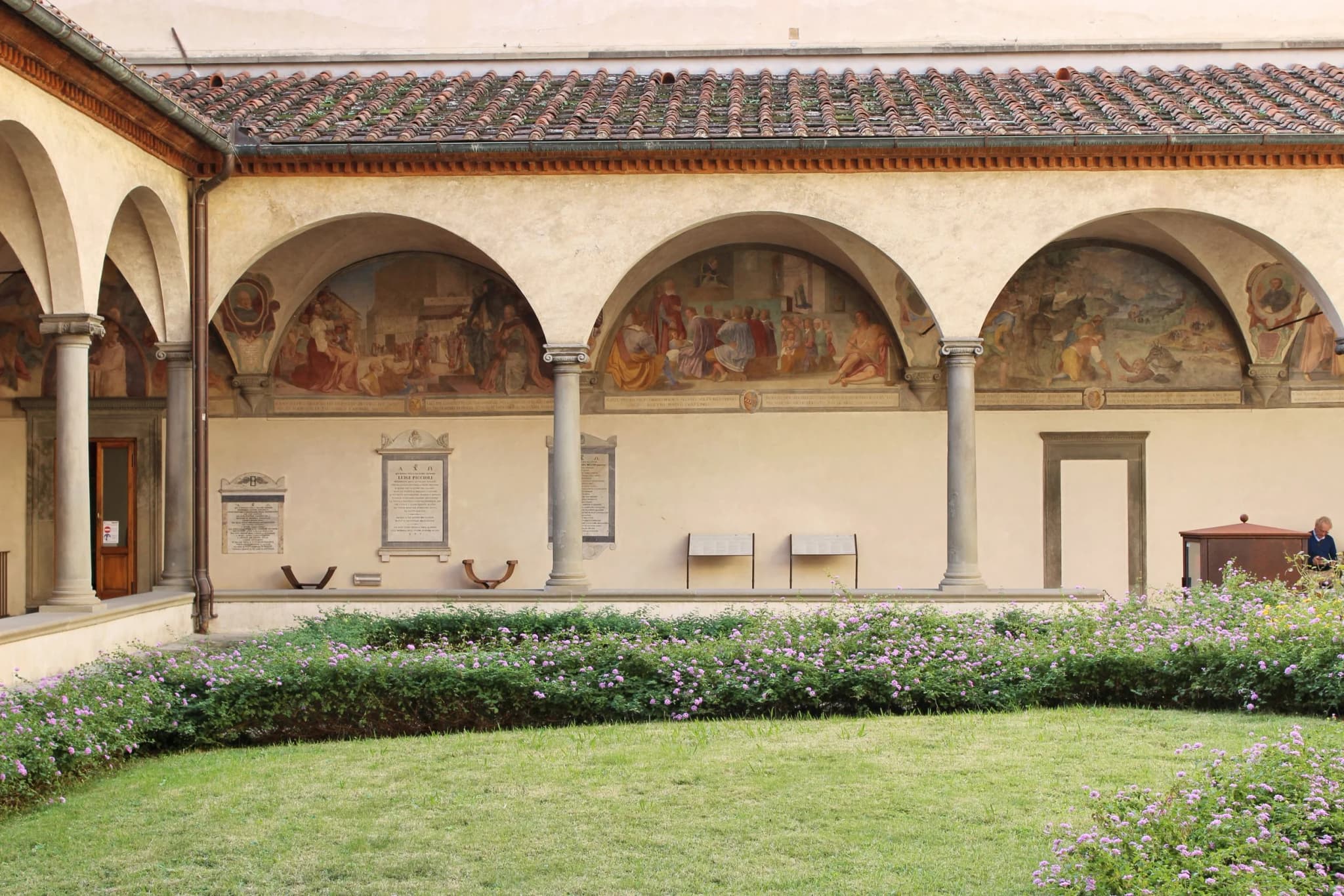
Italy offers a unique network of "Religious Houses of Hospitality" (Case per Ferie). These are guest houses run by religious orders, open to people of all faiths. They are often significantly cheaper than hotels, safe, and centrally located.
- Cost: Typically €50–€80 ($54–$86 USD, Jan 2026) per night.
- Rules: Amenities are simple. Curfews (e.g., closing the gate at 11:00 PM) are common.
- Booking: Platforms like Monastery Stays or Ospitalità Religiosa are the standard booking methods.
Medium-Term "Transitory" Options (1–18 Months)
If you need housing for several months but are not ready for a standard 4-year contract, you must look for "Transitory" arrangements. These are heavily regulated.
The Transitory Contract (Contratto Transitorio)
This is a specific legal lease agreement for stays between 1 and 18 months. It is not a "month-to-month" agreement at will; the duration is fixed.
- Requirement: The contract must state a specific reason for the transience (e.g., a short-term work assignment, a study program, or home renovations). Documentation proving this reason (like a letter from an employer or university) is often required as an attachment.
- Registration: The landlord must register this contract with the Agenzia delle Entrate (Revenue Agency) if the stay exceeds 30 days.
- Immigration Use: A registered Contratto Transitorio is valid proof of accommodation for the Permesso di Soggiorno.
Residences (Serviced Apartments)
Residences are hybrid facilities offering apartment-style living with hotel-like services (cleaning, reception). They are ideal for corporate relocations.
- Pros: All-inclusive bills, flexible cancellation policies, and immediate "proof of accommodation" provided by the management.
- Cons: Generally 30-50% more expensive than private rentals.
Student Housing
In university cities (Bologna, Milan, Rome, Padua), purpose-built student housing (Studentati) is available. Options include:
- DSU Residences: Publicly funded, income-based (requires early application).
- Private Campuses: Luxury student housing (e.g., The Social Hub, Camplus) offering gyms and study rooms. Prices in Milan can exceed €1,000 ($1,080 USD, Jan 2026) per month for a single room.
Cost Estimates (Jan 2026)
Rental prices in major Italian cities have risen significantly. Below are estimated monthly costs for temporary accommodations (inclusive of utilities/fees for short stays, exclusive for contracts). Prices are converted at an approximate rate of €1.00 = $1.08 USD.
| City | Studio (Private Rental) | 1-Bedroom (Private Rental) | Residence/Serviced Apt |
|---|---|---|---|
| Milan | €950–€1,150 ($1,025–$1,240 USD) |
€1,400–€1,650 ($1,510–$1,780 USD) |
€2,000+ ($2,160+ USD) |
| Rome | €850–€1,000 ($920–$1,080 USD) |
€1,200–€1,500 ($1,300–$1,620 USD) |
€1,800+ ($1,940+ USD) |
| Florence | €800–€1,000 ($860–$1,080 USD) |
€1,100–€1,400 ($1,190–$1,510 USD) |
€1,700+ ($1,835+ USD) |
| Smaller Cities (e.g., Turin, Padua) | €600–€800 ($650–$860 USD) |
€800–€1,000 ($860–$1,080 USD) |
€1,200+ ($1,300+ USD) |
Administrative Requirements
For foreigners, accommodation is not just about a roof over your head; it is a bureaucratic necessity.
Tourist Tax (Tassa di Soggiorno)
Almost all municipalities charge a daily tourist tax for the first few nights of a stay. This is usually paid upon arrival, sometimes in cash.
- Rome (2026): Up to €10 ($10.80 USD) per night for luxury hotels; approx. €6 ($6.50 USD) for B&Bs/apartments. Capped at 10 nights.
- Milan (2026): €5–€7 ($5.40–$7.50 USD) depending on category. Capped at 14 nights.
Declaration of Hospitality (Dichiarazione di Ospitalità)
If you are a non-EU citizen staying in a private home (e.g., with a friend or in a private rental where the landlord does not use the automated Alloggiati Web system), the host must submit a Dichiarazione di Ospitalità to the local Questura (Police Headquarters) within 48 hours of your arrival. This document is frequently requested by immigration offices when applying for a Permit to Stay.
Registration for Residency
You generally cannot register for official residency (Residenza) using a tourist booking (Airbnb) or a hotel stay. You need a registered rental contract (Transitory or Long-Term) or a property deed. Without Residenza, you cannot ship household goods tax-free or buy a car.
Safety and Scams
The high demand for temporary housing has led to an increase in rental scams. Follow these verification protocols:
- No View, No Pay: Never transfer a deposit via bank transfer or services like Western Union without seeing the apartment in person or via a live video call.
- Platform Security: If booking via Airbnb or Spotahome, keep all communications and payments inside the platform. A common scam involves a host asking to move the conversation to WhatsApp to "save on fees."
- Verify the CIN: Check that the listing displays its National Identification Code (CIN). This code indicates the property is registered with the Ministry of Tourism.