
Childcare and Schooling in Italy: A 2026 Guide for Foreigners
Italy offers a robust and inclusive education system that is accessible to all children residing in the territory, regardless of their nationality or legal status. The system is primarily public and secular, though it is supplemented by a network of private and "paritarie" (state-recognized) schools. For foreign families, the Italian school system provides a critical pathway for social integration and language acquisition.
Education in Italy: An Overview
The Italian education system is managed by the Ministry of Education and Merit (MIM). Education is mandatory for ten years, typically covering ages 6 to 16. The academic year generally begins in mid-September and ends in early June, with major breaks in December (Christmas), March/April (Easter), and a long summer holiday.
Early Childhood Education and Care (0–6 Years)
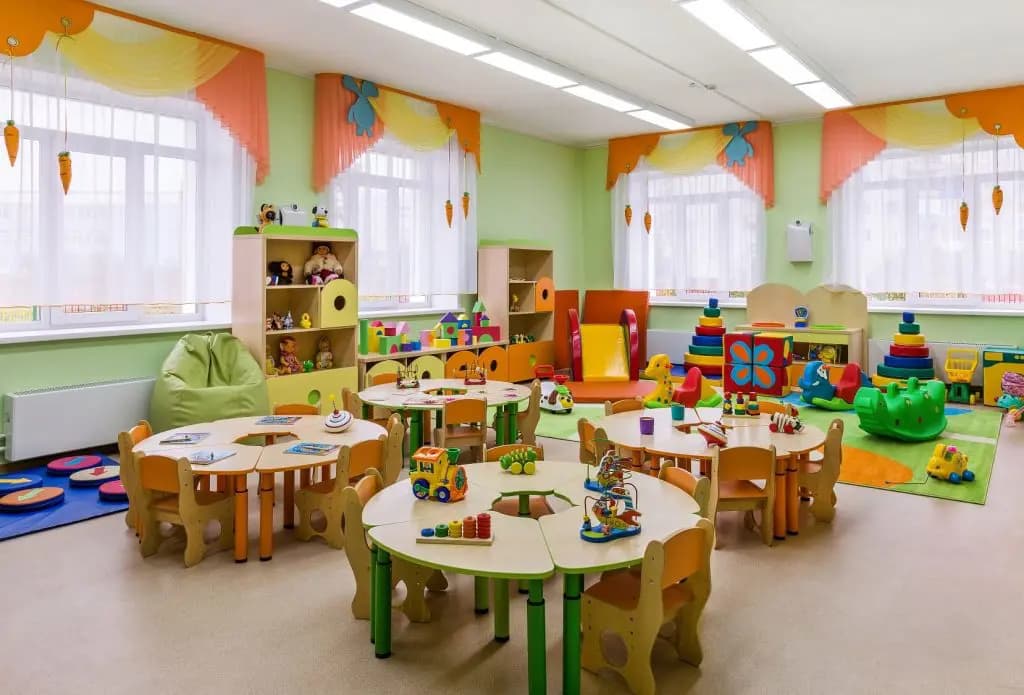
Early childhood education is part of an "integrated 0–6 system." While not mandatory, it is highly utilized by working parents. It is divided into two distinct stages:
- Nido d'Infanzia (Daycare/Nursery): For children aged 3 months to 3 years. These facilities focus on social and physical development. Places in public nurseries are often limited and allocated based on a points system (priority for working parents and low-income families).
- Scuola dell'Infanzia (Kindergarten): For children aged 3 to 6 years. This stage is free in state-run schools, though families contribute to the cost of meals and transport. It prepares children for the transition to primary school.
Mandatory Schooling (6–16 Years)
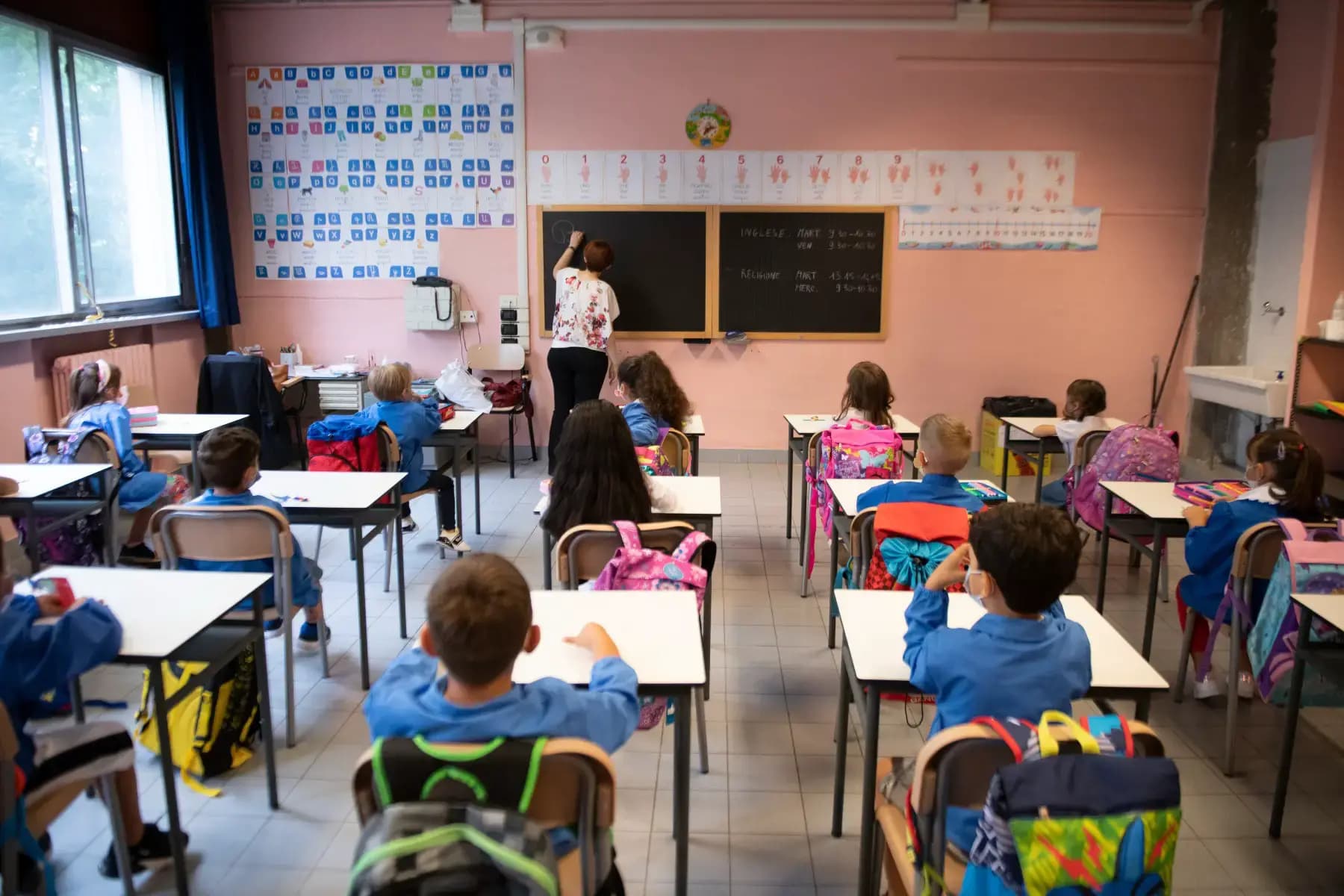
Mandatory education in Italy is divided into three cycles. Public schools at these levels are free of charge for all residents.
1. Scuola Primaria (Primary School)
Aimed at children aged 6 to 11. The curriculum covers Italian, English, Mathematics, Sciences, History, Geography, Art, Music, and Physical Education. Religious education is optional; parents must specify at enrollment if their child will attend "Religione" or an alternative activity.
2. Scuola Secondaria di Primo Grado (Middle School)
For students aged 11 to 14. This three-year cycle concludes with a state exam (Esame di Terza Media), which is required to enter high school.
3. Scuola Secondaria di Secondo Grado (High School)
For students aged 14 to 19. While schooling is only mandatory until age 16 (the first two years of high school), most students complete the full five-year cycle to earn their Diploma di Maturità. Students choose a specific path based on their interests:
- Liceo: Academic focus (e.g., Scientifico, Classico, Linguistico) preparing for university.
- Istituto Tecnico: Technical focus (e.g., Economics, Technology) combining theory with practical skills.
- Istituto Professionale: Vocational focus (e.g., Hospitality, Agriculture) preparing for direct entry into the workforce.
Enrollment Process and Documentation
As of 2026, enrollment for the first year of each cycle (Primary, Middle, and High School) must be completed online through the Unica portal. Enrollment for subsequent years is usually handled automatically by the school.
Key Dates (2026 Academic Year)
- January 13, 2026: Online enrollment opens at 8:00 AM.
- February 14, 2026: Online enrollment closes at 8:00 PM.
- Note: Enrollment for Scuola dell'Infanzia (Kindergarten) and Nido (Daycare) is typically done in person at the school or via municipal portals, not through the central Unica system.
Required Documents
To register a child in an Italian school, parents typically need:
- Identification documents for the child and parents (Passport/ID).
- Italian Tax Code (Codice Fiscale). For children recently arrived, a provisional code can be used.
- Vaccination Records: Mandatory for all children under 16. Non-compliant children may be barred from attending daycare and kindergarten.
- Transcripts or certificates from previous schools (translated into Italian if applicable).
Costs of Education
While public schooling is free, families are responsible for "ancillary" costs. These costs can vary significantly depending on the family's ISEE (economic indicator) score.
| Service | Approx. Monthly Cost (EUR) | Approx. USD (Jan 13, 2026) |
|---|---|---|
| Public Daycare (Asilo Nido) | €100 – €500 | ~$108 – $540 USD |
| School Meals (Mensa) | €60 – €120 | ~$65 – $130 USD |
| Public School Textbooks | Free (Primary) / €200 – €400 (Secondary/Annual) | Free / ~$216 – $432 USD |
| Private International Schools | €800 – €2,500 | ~$864 – $2,700 USD |
*Currency conversion: 1 EUR = 1.08 USD.
International and Private Options
Expatriate families often consider international schools to maintain educational continuity. These schools are private and charge tuition. They primarily follow British, American, French, or International Baccalaureate (IB) curricula.
- Pros: English-speaking environment, smaller class sizes, international community.
- Cons: High costs, potentially less immersion in the Italian language and culture.
- Paritarie Schools: Private schools recognized by the state. They follow the national curriculum and issue valid diplomas, but they charge tuition (usually lower than international schools).
Benefits and Subsidies
To offset childcare costs, the Italian government provides several subsidies managed by INPS:
- Bonus Asilo Nido: A subsidy to help pay for public or private nursery fees. Depending on the family ISEE, it can cover up to €3,000 (~$3,240 USD) per year.
- Assegno Unico e Universale: A monthly allowance for each dependent child from birth until age 21. The amount depends on family income and the number of children.